Deck Shenanigans
A four-rung playing-card guessing game you will almost certainly lose, in three deliberately niche visual themes. The README says Claude Code wrote all of the source code.
Official site deck-shenanigans.vercel.app, verified Nov 3, 2026. Linked as “Play it” in the README of the developer's repository burakTanBilgi/deck-shenanigans, which says the app is deployed on Vercel from that repository's main branch.
Where to play
Every platform this game is on. Links are checked against official sources; we never host or mirror games.
- Play free — official siteBrowserReleasedFree
Runs in a desktop or mobile browser. No download.
Browser (no download) · Mobile · Official link verified Nov 3, 2026.
- View on GitHubGitHubReleased · Source code (Next.js, TypeScript; MIT licence)Free
Download from the GitHub releases page.
Desktop · Official link verified Nov 3, 2026.
About Deck Shenanigans
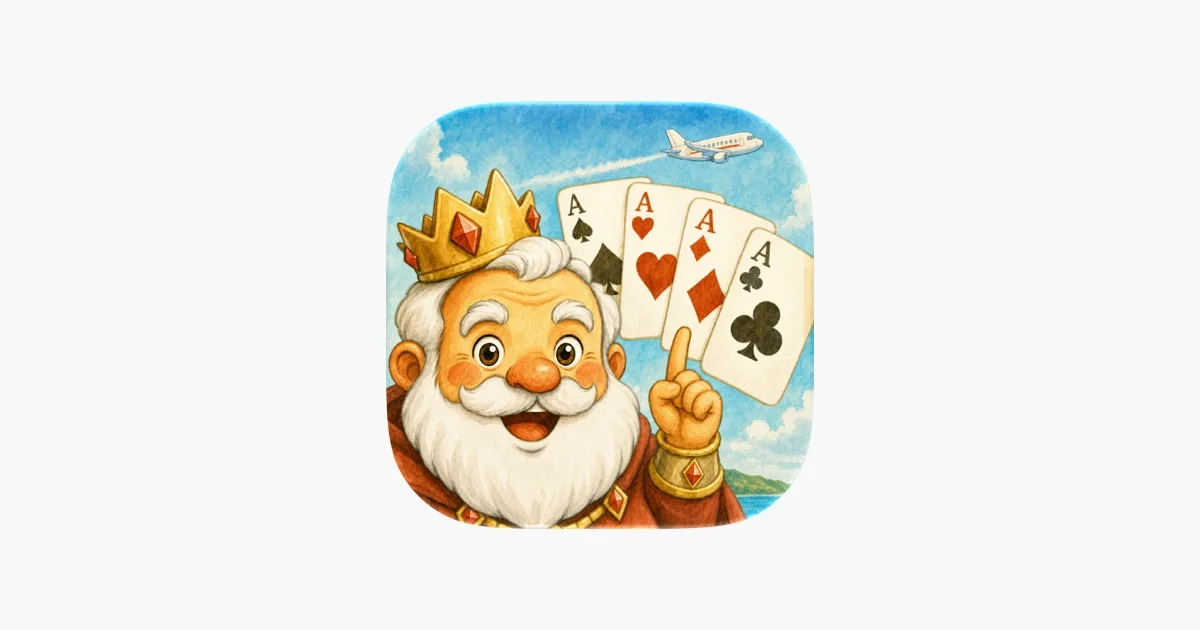
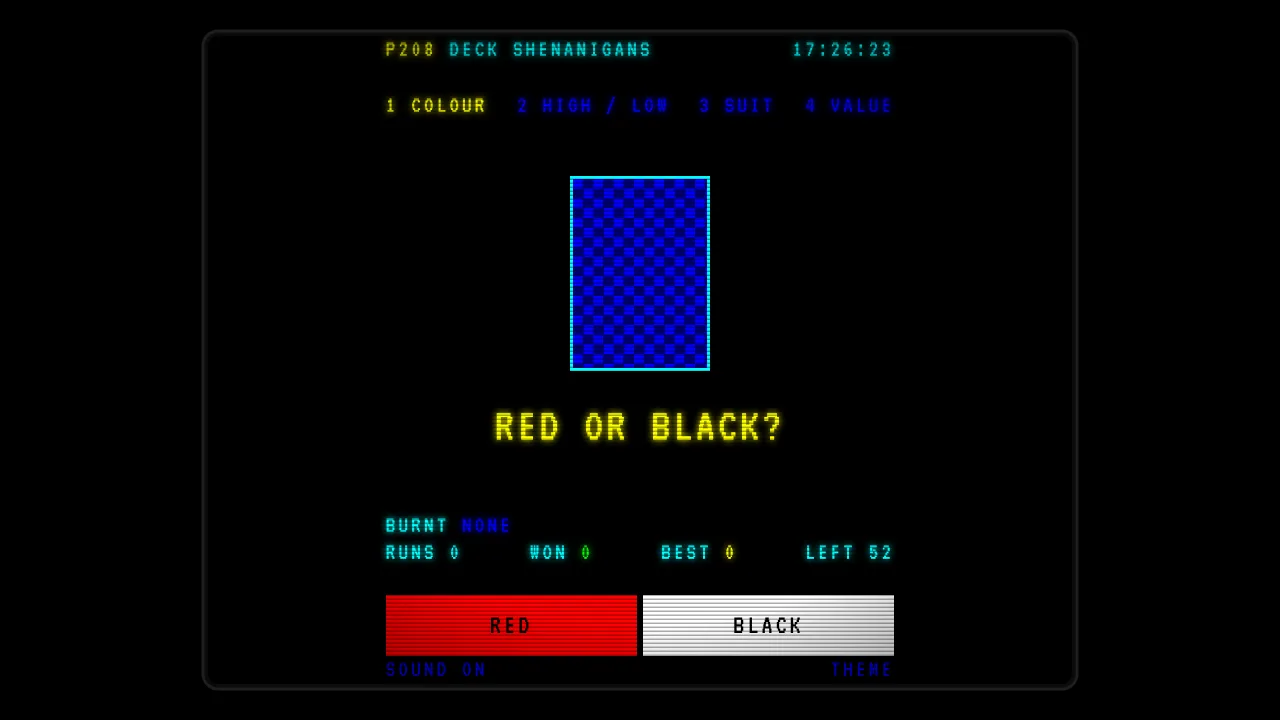
Deck Shenanigans is a small card-guessing game in the browser that its README says you will almost certainly lose. From one shuffled 52-card deck you climb four rungs, each against a freshly drawn card that is then set aside for the rest of the run: guess the colour, then whether the next card is higher or lower, then the suit, then the exact value. A tie on higher or lower is a redraw, aces are high, and any ending reshuffles the deck and sends you back to the first rung. The README puts a normal player's chance of clearing all four rungs at about 1 in 135 (1 in 208 for pure guessing), figures pinned by a seeded test over 400,000 simulated runs. It comes in three visual themes, Teletext, Deco Séance and Riso Noir, with all 52 card faces drawn in code and shown on a separate deck page, four shuffle animations and synthesised sound. The README says the project was written by Claude Code using Claude Opus 5 from a human brief: the repository owner supplied the game idea, the rules, the aesthetic choices and every go/no-go decision, and Claude wrote all the source code, styling, card artwork, tests and documentation. Free, and MIT-licensed.
How it was built
Partially verifiedThe README section “How this was built (AI authorship)” says: “This project was written by Claude Code, using the model Claude Opus 5 (claude-opus-5), working from a human brief.” Per the README and docs/AI-AUTHORSHIP.md, the human repository owner decided the game idea and rules (including the tie-redraw rule), chose the Teletext look from four sketched directions, asked for real card designs, sound, a third theme and larger keys, and made every go/no-go call; Claude Code wrote all of the source code, the CSS for the three themes, the card artwork, the shuffle choreography, the audio synthesis, the tests and the documentation, and chose the third theme, Riso Noir, itself. The README says every commit is co-authored by the model. Reference sheets for the card designs were made with the Higgsfield image service and are not shipped in the app.
- Developerdocs/AI-AUTHORSHIP.md: “All source code, styling, card artwork, tests and documentation in this repository were written by Claude Code running the model Claude Opus 5 (claude-opus-5).” — GitHub (burakTanBilgi)
A static Next.js app in TypeScript. The four-rung engine is pure and written test-first (31 tests, including a seeded Monte Carlo odds test over 400,000 runs that fails if a rule change shifts the difficulty); card faces are drawn with CSS, SVG paths and 8×8 block mosaics; the shuffle animates twelve proxy cards rather than 52; and the sound is Web Audio synthesis with no sample files. Per docs/AI-AUTHORSHIP.md, every theme was driven through every game state headlessly at desktop and mobile sizes to catch clipped layouts and console errors, and the audio was checked by counting the oscillators actually scheduled.
- Engine / framework
- Next.js (React)
- Languages
- TypeScript
- Team size
- Not disclosed
- Initial build time
- Not disclosed
- Development time
- Not disclosed
- Development cost
- Not disclosed
- AI-written code
- ~100% of shipped codeDeveloper ReportedGitHub (burakTanBilgi)
“This project was written by Claude Code, using the model Claude Opus 5 (claude-opus-5), working from a human brief.”Verification notes: Rules, odds, themes, architecture and AI authorship come from the README and docs/AI-AUTHORSHIP.md, read through raw.githubusercontent.com; the MIT licence is from the LICENSE file (© 2026 burakTanBilgi). github.com and the GitHub API did not answer our checks, so the repository's dates, commits and stars are unchecked and no release date is known. The live site loaded on 4 Nov 2026 (page title “P208 Deck Shenanigans”, English). The AI share of 100% rests on the statements in the README and docs/AI-AUTHORSHIP.md that Claude Code wrote all of the source code; the README adds that nothing in the repository is hand-written by a person and then attributed to the model. Teletext, Ceefax and Art Deco are named as visual styles, not other games. The developer's real name, location and team size are not given. Nothing in the sources describes AI used during play. The game was not played.
Game performance
Each figure measures something different — concurrent players, owners, downloads and sales are never interchangeable and are never added together. Labels show where each number comes from.
Browser (official site)
No public metrics recorded for this listing.
Not publicly available: Concurrent players (site), Monthly revenue, Gross revenue.
GitHub
No public metrics recorded for this listing.
Not publicly available: GitHub stars.
Sales & revenue (all platforms)
Browser game — there are no downloads to count.
Reviews & rankings
Not yet reviewed by our editors.
Not currently ranked.
Sources
| Source | Type | Published | Accessed |
|---|---|---|---|
| Deck Shenanigans — README (section “How this was built (AI authorship)”) GitHub (burakTanBilgi) | Repository | Not confirmed | Nov 3, 2026 |
| AI authorship (docs/AI-AUTHORSHIP.md) GitHub (burakTanBilgi) | Repository | Not confirmed | Nov 3, 2026 |
| Deck Shenanigans (live game) burakTanBilgi (Vercel) | Official site | Not confirmed | Nov 3, 2026 |
| Official game page (language check) burakTanBilgi | Official site | Not confirmed | Nov 3, 2026 |
Similar games