Cinderbelt
A top-down 3D space game in the browser: build your ship from parts on a grid, mine, trade and fight pirates in an endless universe. The developer designs and decides; AI coding agents (Claude Code) write the code, art scripts and music.
Official site amoreo140.github.io, verified Nov 3, 2026. Linked as “Play in your browser” in the README of the developer's repository amoreo140/cinderbelt.
Where to play
Every platform this game is on. Links are checked against official sources; we never host or mirror games.
- Play free — official siteBrowserEarly access · README: “Early but playable, and under active development.”Free
Runs in a desktop browser. No download.
Browser (no download) · Official link verified Nov 3, 2026.
- View on GitHubGitHubEarly access · Source code (TypeScript, MIT licence); art and music under CC BY 4.0. The public history starts with a single release commitFree
Source code repository, not a place to play.
Official link verified Nov 3, 2026.
About Cinderbelt
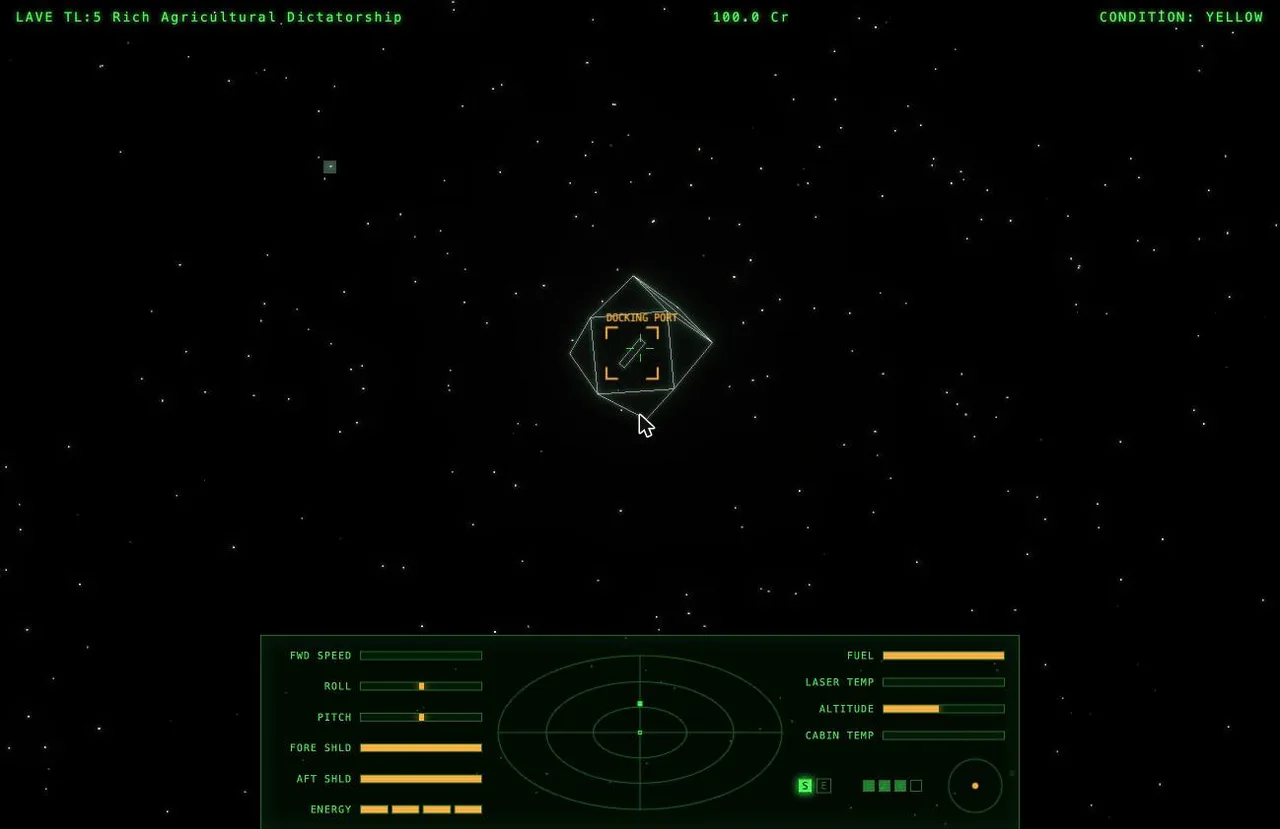
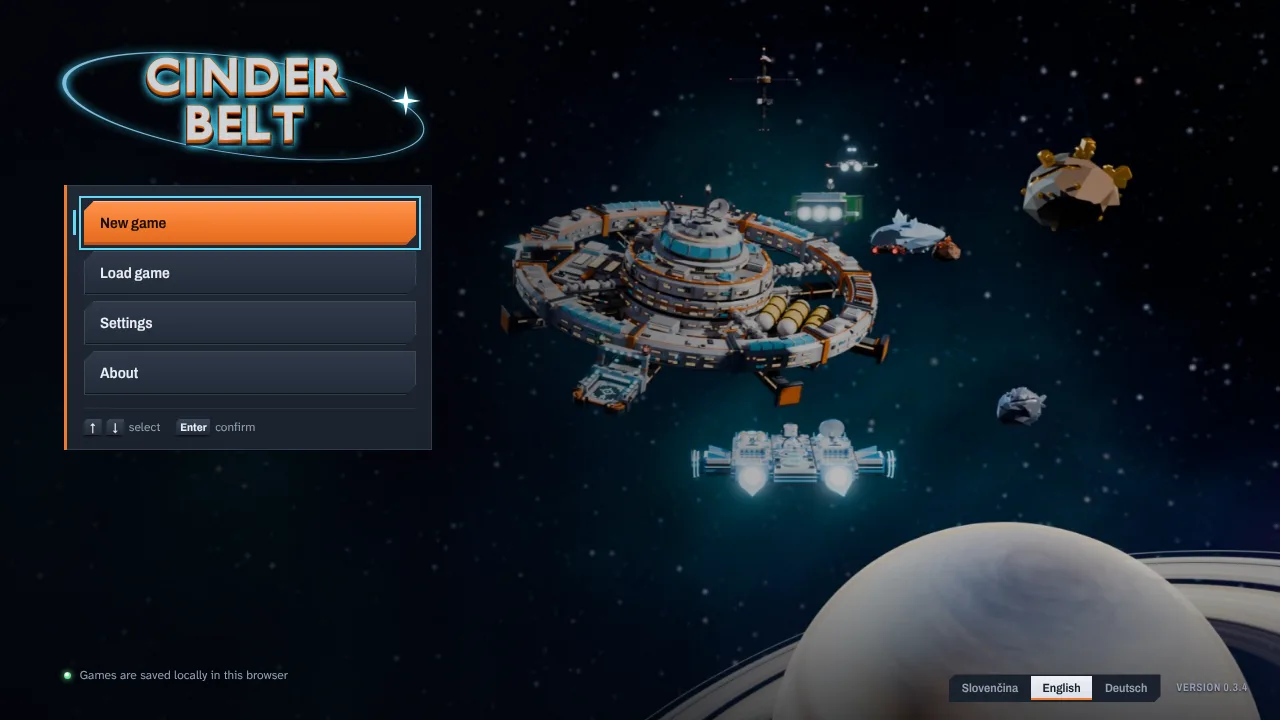
Cinderbelt is a free top-down 3D space game in the browser, in early access. You mine asteroids, trade and assemble your ship from parts on a grid; the ship is simulated as one rigid body, so its mass, centre of gravity and moment of inertia come from where you put the engines, gyroscopes, cargo holds and armour, and that changes how it flies. Flight is inertial, with dampers you can switch off. Mining is a skill: you aim the laser at veins of varying grade and lasers overheat. The universe is endless and generated from a seed in sectors with a security level (Quiet, Guarded, Contested or Pirate), their own sky and music. The economy has fuel from ice, energy from reactors, cargo mass, tiered crafting, a market and contracts (delivery, mining, hunt, rescue, survey, escort and more); you can join Guild convoys, restore Guild relays and fight the Rust pirate clans, whose ships are built from parts like yours, with named captains, bounties and Rust Fortresses. Shots hit the part they reach, severed sections become separate wrecks, and you can tow and salvage them. There is a scanner, signals, comets, derelict stations, ship graveyards, a journal and a sector map, an Archive research tree instead of XP, a home station with a paint shop and trophy hall, a hangar for several ships and four death-penalty settings. The README lists English, Slovak and German. It is made by one person who designs the game and makes the decisions; the code, the art (Blender Python scripts) and the music (composed as code) are written by AI coding agents, Claude Code, under that person's direction. Saves are kept in the browser. The code is MIT-licensed and the art and music CC BY 4.0.
How it was built
Partially verifiedThe README's “Made with AI” section says the author designs the game and makes the decisions, while the code, the Blender-script art and the code-composed music are written by AI coding agents (Claude Code) working under the author's direction, with automated tests, a balance bot and performance budgets as guard rails. The making-of page (docs/MADE-WITH-AI.md) splits the work: the author owns the vision, design decisions, playtesting, taste and scope; the agents do the game code, the art as Python scripts for headless Blender, the music composed and rendered as code, the tests and the documentation, and review other agents' work. A feature goes from a brainstorm and design spec with the author, through a critique by a separate agent and an implementation plan, to a coordinator agent that hands small tasks to fresh sub-agents, then review agents, verification passes and the author's own playtest. The page says the author does not review every line but reviews behaviour by playing. No model is named.
- DeveloperMaking-of: “It is made by one person who designs and decides, and by AI coding agents (Claude Code) that do the implementation under that person's direction.” — GitHub (amoreo140)
A Vite and TypeScript project with three.js rendering over a deterministic, pure simulation (src/sim/ uses no three.js, DOM, Math.random or Date, so every situation can be reproduced from a seed). Saves are versioned with migrations. Guard rails include fixtures that jump straight to saved situations, a scripted balance bot and economy model, a “saboteur” bot that hunts for exploits, a performance budget measured on a production build, Playwright screenshots that agents must view, and checks that keep code comments in English and every player-facing string in all languages. Art is generated by Python scripts in headless Blender and the soundtrack is synthesised and rendered offline by a Python pipeline, with no samples or downloaded assets. Per the making-of, work started in mid-October 2026 and about 640 commits of private history came before the first public release, which had about 4,470 unit tests and 177 end-to-end tests.
- Engine / framework
- Three.js (TypeScript, Vite)
- Languages
- TypeScript
- Team size
- 1 (solo)Developer ReportedGitHub (amoreo140)
- Development time
- Not disclosed
- Development cost
- Not disclosed
- AI-written code
- Not disclosed
“The code, the Blender-script art and the code-composed music are written by AI coding agents (Claude Code) working under the author's direction.”Verification notes: Features, controls, status and AI use come from the README and docs/MADE-WITH-AI.md, read through raw.githubusercontent.com on 4 Nov 2026; the MIT licence is from the LICENSE file (© 2026 Cinderbelt contributors). Team size 1 rests on the making-of's “made by one person who designs and decides”. Languages: the README lists English, Slovak and German, while the making-of describes the game as bilingual (Slovak and English), so German was probably added later; this was not checked in the game. The hosted game (page language en) loaded on 4 Nov 2026 and its main script was checked for calls to AI services; none were found. The first public release date is not stated (the making-of says work began in mid-October 2026), so no release date is recorded. github.com and the GitHub API were not used, so stars and commit dates are unchecked. The game was not played.
Development history
- Mid-October 2026
Work on the game starts; about 640 commits of private history follow before the first public release, per the making-of.
DeveloperGitHub (amoreo140)
Game performance
Each figure measures something different — concurrent players, owners, downloads and sales are never interchangeable and are never added together. Labels show where each number comes from.
Browser (official site)
Free in the browser with keyboard and mouse; saves are kept in the browser (IndexedDB) and can be exported to a .cinder file.
No public metrics recorded for this listing.
Not publicly available: Concurrent players (site), Monthly revenue, Gross revenue.
GitHub
No public metrics recorded for this listing.
Not publicly available: GitHub stars.
Sales & revenue (all platforms)
Browser game — there are no downloads to count.
Reviews & rankings
Not yet reviewed by our editors.
Not currently ranked.
Sources
| Source | Type | Published | Accessed |
|---|---|---|---|
| amoreo140/cinderbelt — README (section “Made with AI”) GitHub (amoreo140) | Repository | Not confirmed | Nov 3, 2026 |
| How Cinderbelt is made with AI (docs/MADE-WITH-AI.md) GitHub (amoreo140) | Devlog | Not confirmed | Nov 3, 2026 |
| Cinderbelt (hosted game) amoreo140 (GitHub Pages) | Official site | Not confirmed | Nov 3, 2026 |
Similar games